

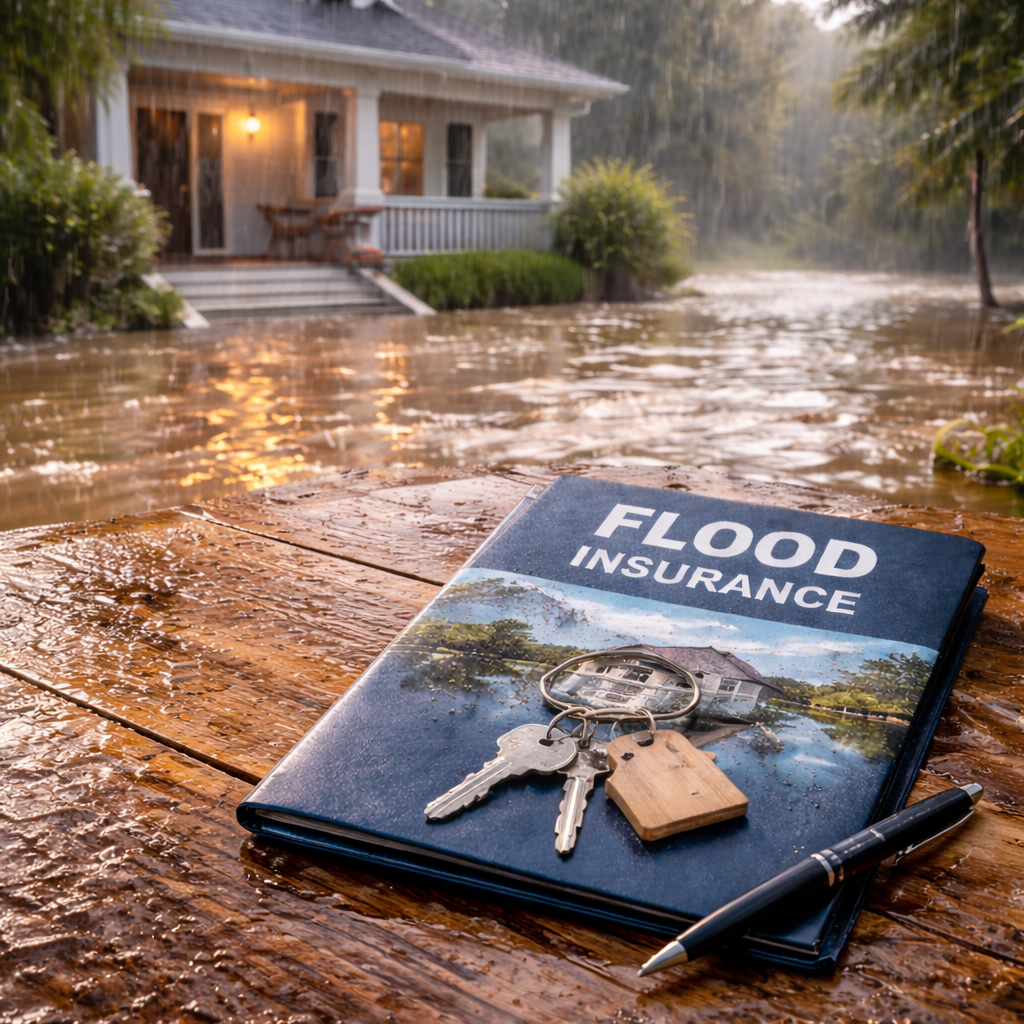
If you own a short-term rental in Florida, insurance is no longer a “set it and forget it” line item. Between Citizens’ phased-in flood insurance requirements and Florida’s new flood disclosure law taking effect October 1, 2025, December is the right moment to audit your coverage — before renewal notices start landing in 2026.
This isn’t about panic or over-insuring. It’s about knowing what’s changed, what applies to STRs specifically, and what to verify now so you’re not scrambling later.
Florida’s New Flood Disclosure Law (Effective Oct 1, 2025)
Florida has introduced a new statutory requirement that directly affects landlords — and indirectly affects some STR owners.
What the law actually says
Starting October 1, 2025, Florida law requires landlords to provide a separate Flood Disclosure document for leases of one year or longer. The disclosure must state, in plain language, that:
“Renters’ insurance policies do not include coverage for damage resulting from floods.”
Landlords must also indicate whether they know of prior flooding, previous flood insurance claims, or FEMA disaster assistance related to the unit.
Does this apply to STRs?
- Most short-term stays (under 12 months) are not legally required to use this disclosure.
- Monthly, seasonal, or snowbird rentals that approach or roll into longer terms sit in a gray area.
Best practice: Even when not mandated, using a short, simplified flood disclosure for STRs improves transparency and reduces disputes — especially in coastal South Florida markets where flooding is a known risk.
Why this matters
If a landlord fails to disclose truthfully and a tenant later suffers a substantial flood loss, the tenant may:
- Terminate the lease within 30 days
- Receive a refund of prepaid rent for the unused period
That’s a meaningful liability exposure — and one that’s easy to mitigate with clear documentation.

Citizens’ Flood Insurance Requirement: Who Needs It and When
Citizens Property Insurance has been steadily tightening flood insurance requirements for wind-covered personal lines policies, and many South Florida STRs are now inside the compliance window.
The phase-in schedule
If your policy includes wind coverage, flood insurance is required based on Coverage A (dwelling value):
- 2024: $600,000+
- 2025: $500,000+
- 2026: $400,000+
- 2027: All policies, regardless of value
Homes located in FEMA Special Flood Hazard Areas (SFHA) already require flood coverage, regardless of value.
How much flood coverage is required?
- Flood limits must be at least equal to Coverage A
- If the NFIP maximum ($250,000) is lower than your dwelling value, Citizens accepts the NFIP max as compliant
Owners may still choose private flood insurance to close the gap above NFIP limits — but it’s optional from Citizens’ standpoint.
What proof Citizens accepts
You must submit:
- Flood policy declarations page or
- Application + proof of payment (pending policy)
- Plus the Policyholder Affirmation Regarding Flood Insurance (CIT FW01)
Failure to comply can result in non-renewal or cancellation, subject to statutory notice periods.
The STR Insurance Audit to Run Before 2026
Flood compliance is only part of the picture. December is also the right time to confirm your policy actually matches how your STR operates.
A. Correct policy form & occupancy
Many owners still carry:
- HO-3 (owner-occupied) policies
- Landlord forms that quietly exclude transient use
Confirm that short-term rental activity is explicitly permitted by your policy or endorsement.
B. Liability & exclusions
Review your policy for exclusions tied to:
- Pools or hot tubs
- Bikes, kayaks, or other amenities
- Animal or breed exclusions
- Assault & battery limitations
These exclusions are common — and often misunderstood until there’s a claim.
C. Rental income & business interruption
Ask:
- Is rental income covered?
- What triggers coverage (direct physical loss only)?
- Is flood excluded from income protection?
Important nuance:
- NFIP flood policies do not provide Loss of Use or rental income coverage
- Some private flood policies may, depending on carrier
D. Hurricane deductible reality check
Florida hurricane deductibles are percentage-based.
Example:
- Coverage A: $500,000
- 2% hurricane deductible
- $10,000 out-of-pocket before coverage applies
Many owners underestimate this exposure.
E. Ordinance or Law (O&L) coverage
Especially relevant for older or coastal properties:
- Code upgrades after a covered loss
- Electrical, elevation, or life-safety requirements Without O&L coverage, these costs come out of pocket.

NFIP vs. Private Flood: What Actually Differs
If flood insurance is now unavoidable, the choice matters.
NFIP basics
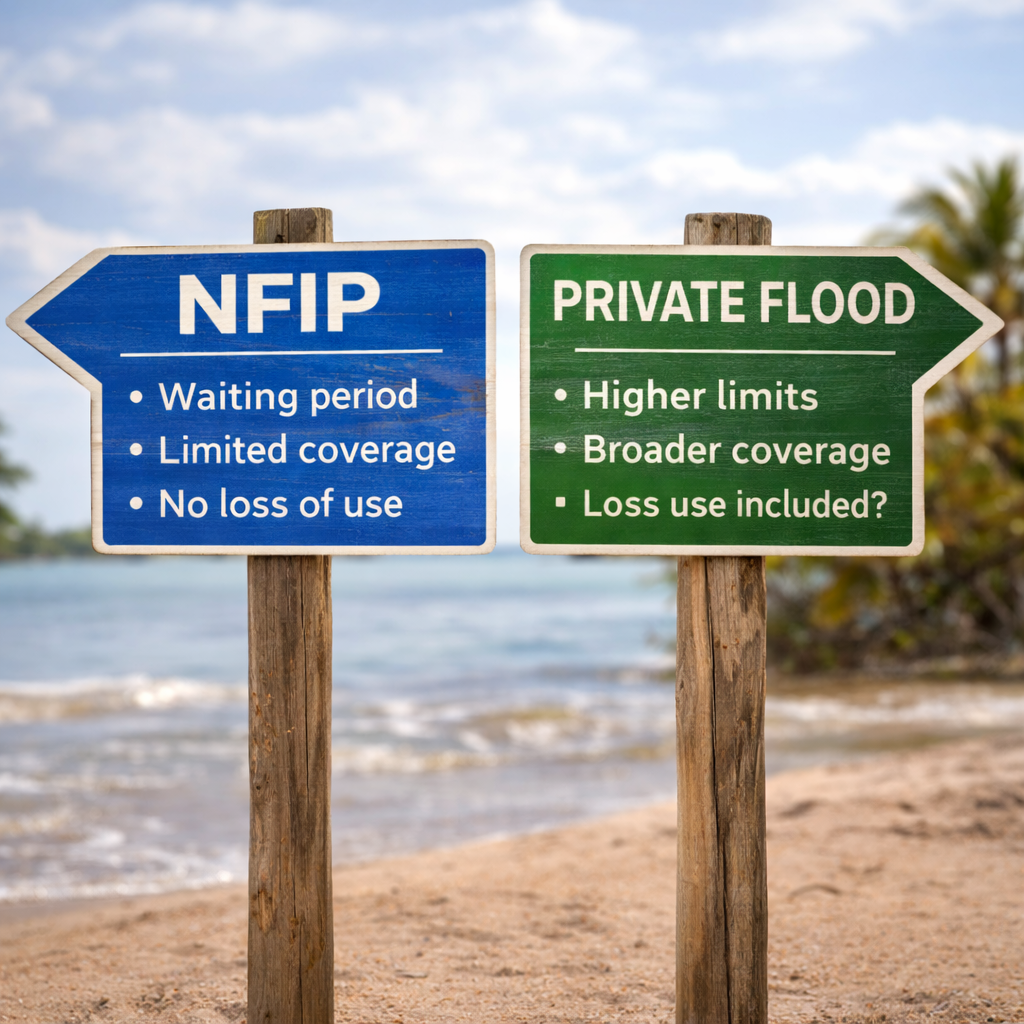
- 30-day waiting period (with limited exceptions)
- Max $250,000 building / $100,000 contents
- No Loss of Use / ALE
- Contents typically ACV
Private flood options
- Often higher limits
- Sometimes shorter waiting periods
- May include Loss of Use or replacement cost contents
- Terms vary widely by carrier
For many STR owners, NFIP satisfies Citizens, while private flood closes coverage gaps.
The “Pull This Now” December Checklist
Before renewals begin, gather:
- Declarations pages: property, wind, flood, umbrella
- Flood proof + CIT FW01 (if Citizens-insured)
- Loss runs (3–5 years)
- Wind mitigation & 4-Point inspection
- Roof age/type & major system updates
- STR facts: max occupancy, amenities, safety devices
Having this ready avoids rushed, expensive decisions later.

Florida insurance rules aren’t just tightening — they’re becoming more specific. For STR owners, that means the biggest risk isn’t overpaying for coverage; it’s assuming yesterday’s policy still fits today’s rules.
A short December review can:
- Prevent Citizens compliance issues
- Clarify flood exposure gaps
- Reduce renewal surprises
- Protect both revenue and reputation
Think of this as insurance hygiene, not crisis management. The owners who review now are the ones who renew calmly in 2026.