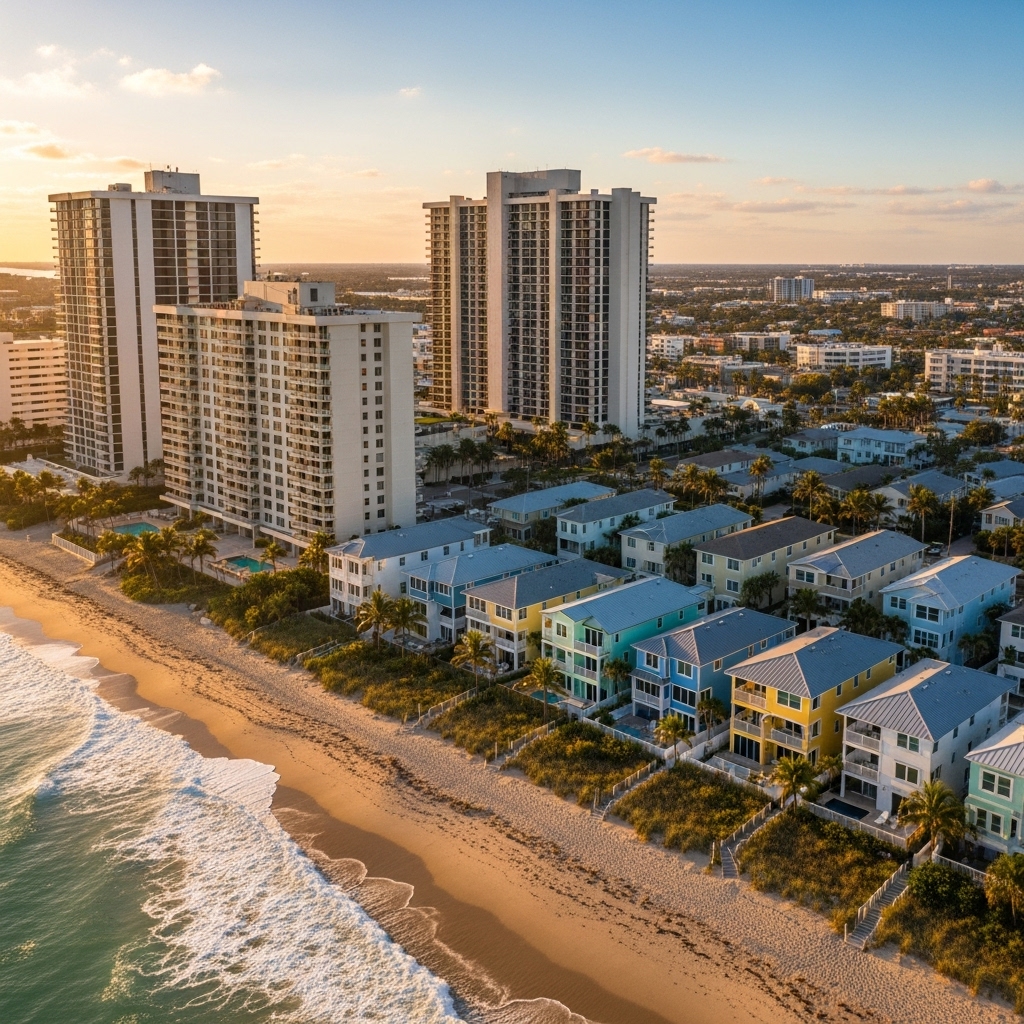


Florida 2025: A Pivotal Year for Resort-Area Investors
Between rising HOA fees, stricter reserve laws, cooling condo liquidity, and stable-but-high borrowing costs, Florida investors are re-evaluating where their next dollar goes. And one question comes up again and again:
Is a condotel still worth it — or do STRs offer a better return in 2025?
Below is a data-driven comparison to help you decide where the smarter long-term bet lies.
The Market Backdrop: Florida Condos Are Cooling
Florida’s condo market is slowing — and that matters for any condotel investor thinking about liquidity or exit timing.
- Closed sales: –14.2% YoY (Q2 2025)
- Median time to contract: 65 days (up from 48)
- Months’ supply: 10.0 (up from 7.0)
This translates to longer sell times, more price negotiation, and a smaller buyer pool — particularly impactful for condotels, which already face limited financing options.
Meanwhile, half of Florida’s condo stock is 30+ years old, and post-Surfside legislation (SB 4-D, SB 154) is pushing associations toward expensive structural inspections and reserve funding.
The result:
Higher HOA dues, more special assessments, and rising operational costs.
That’s before even factoring in Florida’s insurance environment.
How Condotels Actually Work — and Why Returns Feel Tight
Condotels promise convenience: front desks, housekeeping, hotel branding, and turnkey management. But the trade-offs are real.
How the money flows:
- ~10% skim “off the top” by the hotel program
- Remaining revenue split ~50/50 between owner and operator
- ~5% FF&E reserve taken from the owner’s share
Owners also face:
- Required furnishing packages
- Brand standards they must maintain
- Rental blackout periods
- Program-set pricing (no dynamic flexibility)
- High resort/HOA fees typical of oceanfront towers
And critically:
Condotels are ineligible for conforming loans.
Fannie Mae classifies them as hotel/motel assets — pushing buyers into portfolio or non-QM loans with 20–30%+ down payments and tighter scrutiny.
This narrows resale liquidity and creates a structural disadvantage compared to STR-suitable properties.

STRs in Flex Zones: More Work, More Yield, More Control
Florida remains a local-control state after the 2024 vacation-rental bill veto. Cities set their own rules — and the clearest, most predictable jurisdictions are thriving.
Examples:
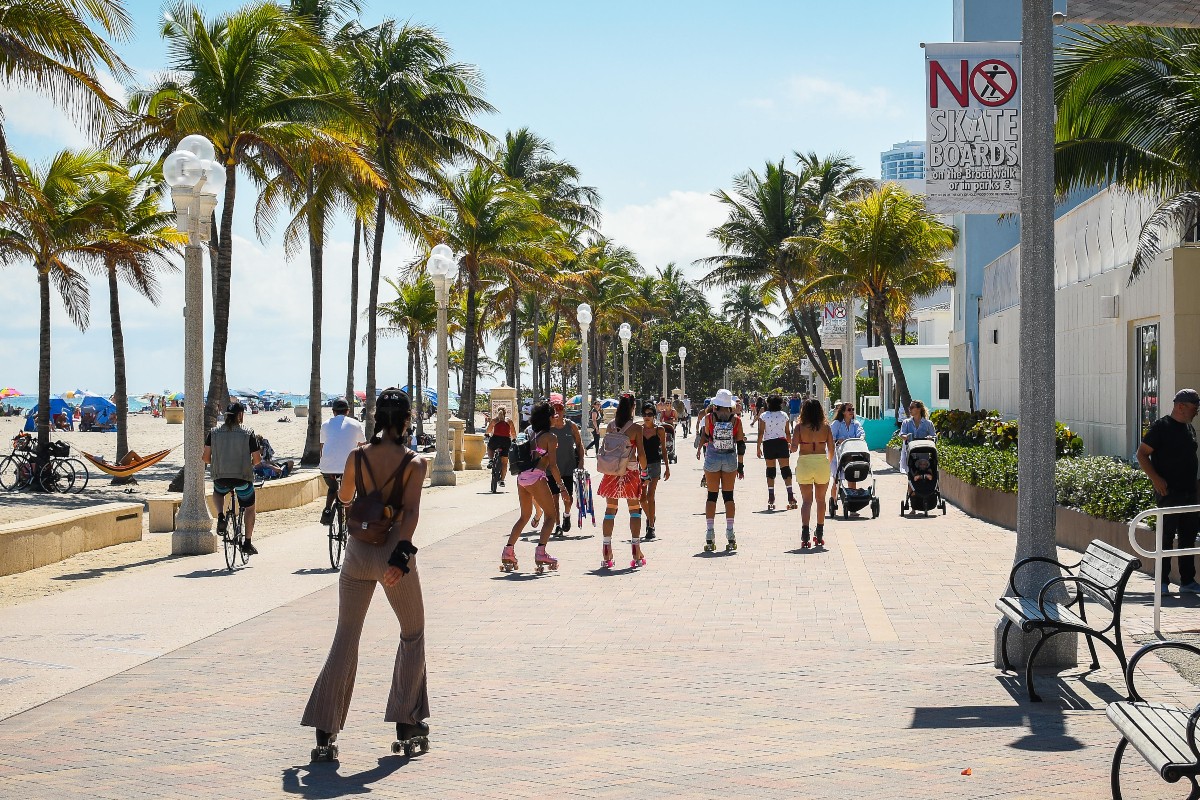
Hollywood, FL
- License required
- Mandatory noise-monitoring device
- Posted quiet hours
- 24/7 local contact
Miami-Dade (unincorporated)
- Certificate of Use
- Local responsible party
- Penalty bond requirement
When rules are clear, operators can systematize compliance. And in stable flex-stay zones, STR investors enjoy:
- Dynamic pricing control
- Design control (impacting ADR)
- Amenity control (pet fees, parking, mid-stay cleans)
- Guest-mix diversification including 28–90 night “slomads”
The upside is meaningful — especially now that longer stays account for ~17–18% of Airbnb’s total nights.

Revenue Outlook: Predictable vs. Flexible
Condotels
✔ Stable occupancy
✘ Lower ADR share due to splits
✘ Limited pricing autonomy
✘ Mandatory room refresh contributions
STRs
✔ ADR upside tied to design, location, and dynamic pricing
✔ Direct access to tourism tailwinds (record 33.1M visitors in Q4 2024)
✔ High flexibility during peak season
✔ Ability to pivot to long stays for steadier occupancy
AirDNA’s mid-2025 outlook forecasts a gradual occupancy uptick and muted but positive ADR growth, favoring STR operators with flexible pricing.

Expenses: The Hidden Math Behind NOI
Condotels
Recurring, unavoidable expense layers:
- High HOA/resort fees
- 10% skim + 50/50 revenue split
- 5% FF&E reserve
- Housekeeping charges
- Parking/valet allocations
- Limited control over repairs or CapEx timing
STRs
Flexible but responsibility-heavy expenses:
- Cleaning/turnovers
- PM fees (typically 20–30% in Florida)
- Insurance (up ~34% since 2022)
- Utilities
- Platform fees (Airbnb’s host-only 15.5% path for PMS accounts)
But owners can offset costs by:
- Passing cleaning fees to guests
- Charging pet/parking premiums
- Optimizing ADR around shoulder-season pockets

Legislative & Insurance Realities for 2025
STRs
- Bill veto keeps rules local — city-by-city clarity is key.
- STR regulations trending toward professionalized enforcement, not bans.
- Insurance remains a pressure point but varies by construction type and region.
Condotels & Condos
- SB 4-D & SB 154 push associations into mandatory reserves + structural inspections.
- 2025–2026 are major compliance years — and fees are rising accordingly.
- Older coastal condotel towers face the steepest increases.

Financing & Exit Liquidity: A Critical Split
STR-Friendly Assets
✔ Eligible for conventional loans (if warrantable)
✔ Widespread DSCR and portfolio options
✔ Broader resale audience
✔ Faster absorption than condos in current market conditions
Condotels
✘ No conforming loans
✘ Buyers must go portfolio/non-QM
✘ 20–30%+ down payments
✘ Smaller buyer pool → slower absorption
✘ Constrained resale potential during cooling markets
With Florida condos averaging 65 DOM and 10 months of supply, this matters.

Guest Demand in 2025: Who Books What?
STR Guests Want:
- Full kitchens
- Private outdoor space
- Workspaces
- Laundry
- Multi-bed layouts
Families, remote workers, and long-stayers increasingly choose STRs for these amenities.
Condotel Guests Want:
- Hotel-style service
- Daily cleaning
- On-site amenities
- Prime locations
Both markets have demand — but STRs appeal to growing traveler segments with higher ADR potential.

Risk & Resilience in Florida
Condotels
✔ Hotels reopen faster post-storm → can benefit from relief-worker occupancy
✘ Dependence on tower-wide operations and HOA solvency
STRs
✔ Ability to pivot to mid-term stays during recovery
✔ Faster individual repairs
✘ Higher vulnerability to local regulatory tightening
Insurance remains a statewide structural challenge for both, but older condo/condotel towers are hit hardest.
The Math: Who Really Nets More?
Below is the side-by-side annual net assuming the same $50,000 gross revenue.
| Metric | STR (Self-Managed) | STR (20% PM) | Condotel |
|---|---|---|---|
| Platform fee | $1,500 | — | — |
| Management fee | — | $10,000 | $5,000 (10% skim) |
| Owner share after skim/split | — | — | $22,500 |
| FF&E reserve (5%) | — | — | $1,125 |
| Cleaning/turnover | $6,000* | 0–$6,000 | Included/varies |
| Fixed carrying | $8,000 | $8,000 | $12,000 |
| Owner net | $34,500 | $32,000 | $9,375 |
*If cleaning is passed to guests, self-managed STR nets closer to $40,500.
Version B — Upside Case ($75,000 Gross)
- STR (20% PM): $52,000 net
- STR (Self-managed): $56,500 net
- Condotel: $20,062.50 net
Condotels typically deliver 30–50% of STR net on matched gross revenue.

Which Investor Each Option Fits
STRs Are Best For:
- Operators focused on yield
- Owners wanting pricing/design autonomy
- Investors leaning into 28–90 night stays
- Buyers seeking better exit liquidity
Condotels Are Best For:
- Passive investors
- Buyers valuing hotel service and brand consistency
- Those prioritizing “hands-off” operations in prime resort corridors

Our 2025 Verdict: STRs Hold the Clear Edge
Well-located STRs in clear, stable flex-zone markets remain the stronger investment for 2025 — especially those designed for mid-length stays and professional operations.
You gain:
✔ Better NOI per dollar of revenue
✔ More control
✔ Faster resale
✔ Ability to pivot to demand shifts
Condotels still have a place — particularly for truly passive investors who value simplicity over yield — but rising HOA costs, financing barriers, and high fee stacks continue to drag returns.
For most Florida investors in 2025, the smarter bet is a compliant, professionally run STR in a jurisdiction with clear rules and long-stay demand.