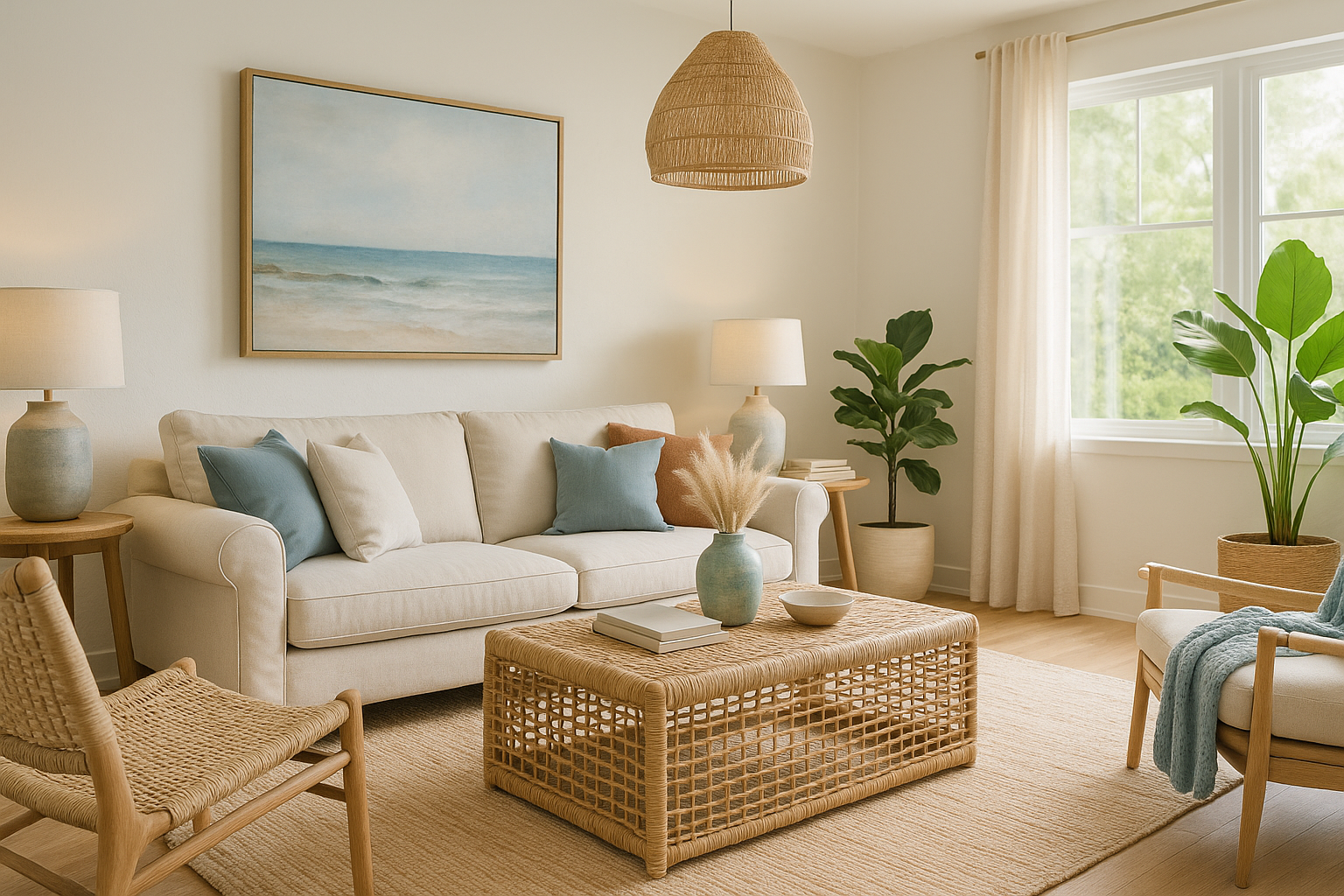
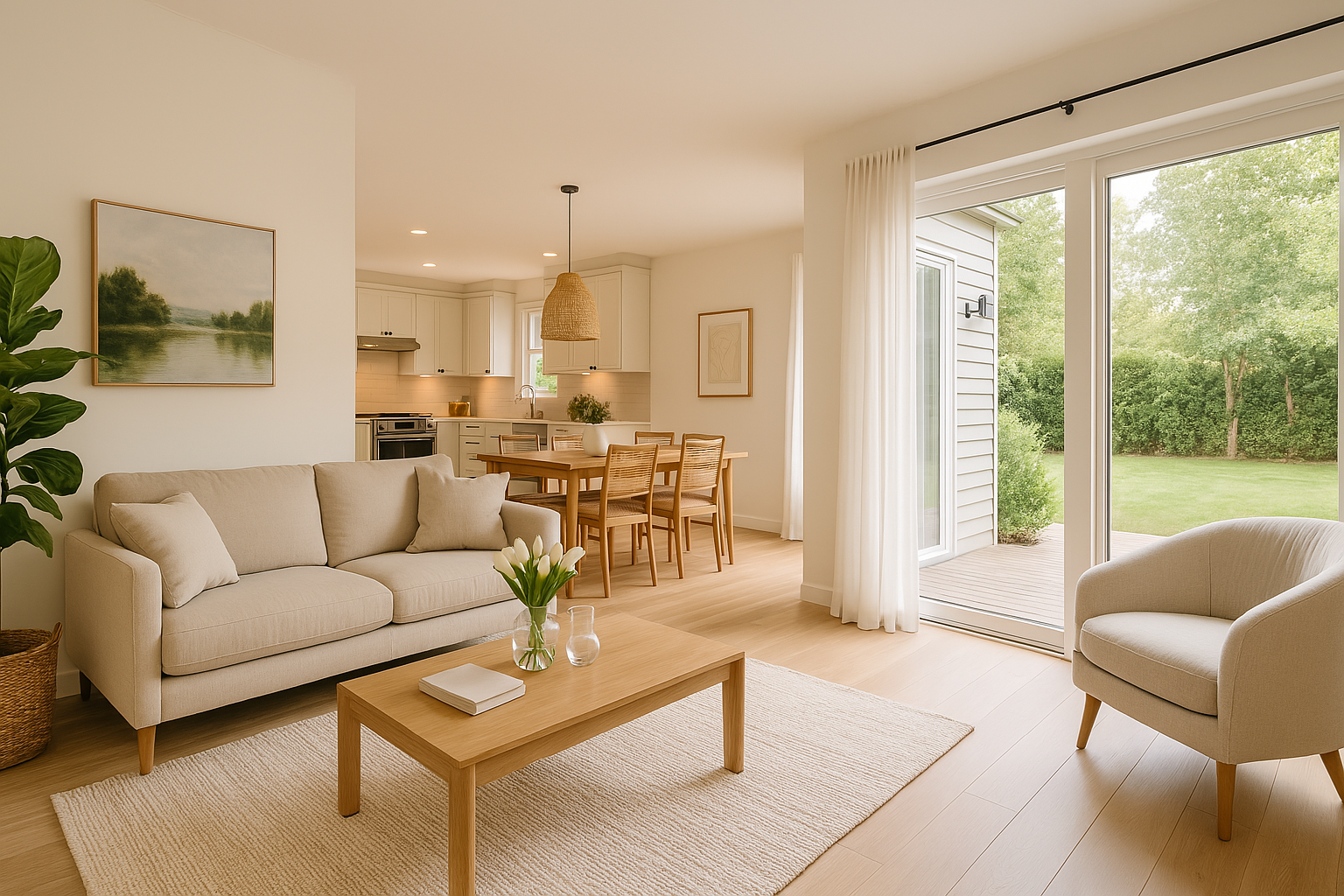
In condo STRs, noise is rarely a “nice-to-fix” issue. It’s the fastest path to bad reviews, HOA fines, and listing restrictions. Guests forgive dated finishes; they don’t forgive poor sleep.
As cities densify and condo boards tighten enforcement, acoustic performance has become a design requirement, not a specialty upgrade. The challenge? Most sound solutions either look industrial, don’t survive turnover, or fail HOA scrutiny.
This guide breaks down what actually works—guest-proof, photo-friendly acoustic design strategies that reduce complaints without turning your condo into a recording studio.
Why Noise Is the #1 Condo Pain Point
Noise complaints aren’t just subjective—they’re predictable.
Health guidance consistently shows that indoor nighttime noise above roughly 30–40 dBA disrupts sleep. In multifamily buildings, those levels are easily exceeded by hallway traffic, elevators, balcony conversations, or footfall from the unit above. Guests may not articulate the decibel math, but they feel it.
At the same time, urban noise sensitivity is rising. Municipal data across major cities shows noise as the most frequent quality-of-life complaint. Condo boards are responding accordingly.
In Florida, associations are empowered to fine repeated noise violations, often up to statutory caps per incident. That turns a design oversight into an operational risk—especially for STRs with high turnover and unpredictable guest behavior.
Bottom line: Quiet interiors protect reviews, reduce HOA exposure, and materially improve guest satisfaction.
Condo Acoustics—Without the Jargon
To design for quiet, you only need a few fundamentals:
- Airborne noise: voices, TVs, music traveling through walls and floors
- Impact noise: footsteps, dropped objects, chair movement traveling through structure
- Reverberation: how “loud” or echoey a room feels internally
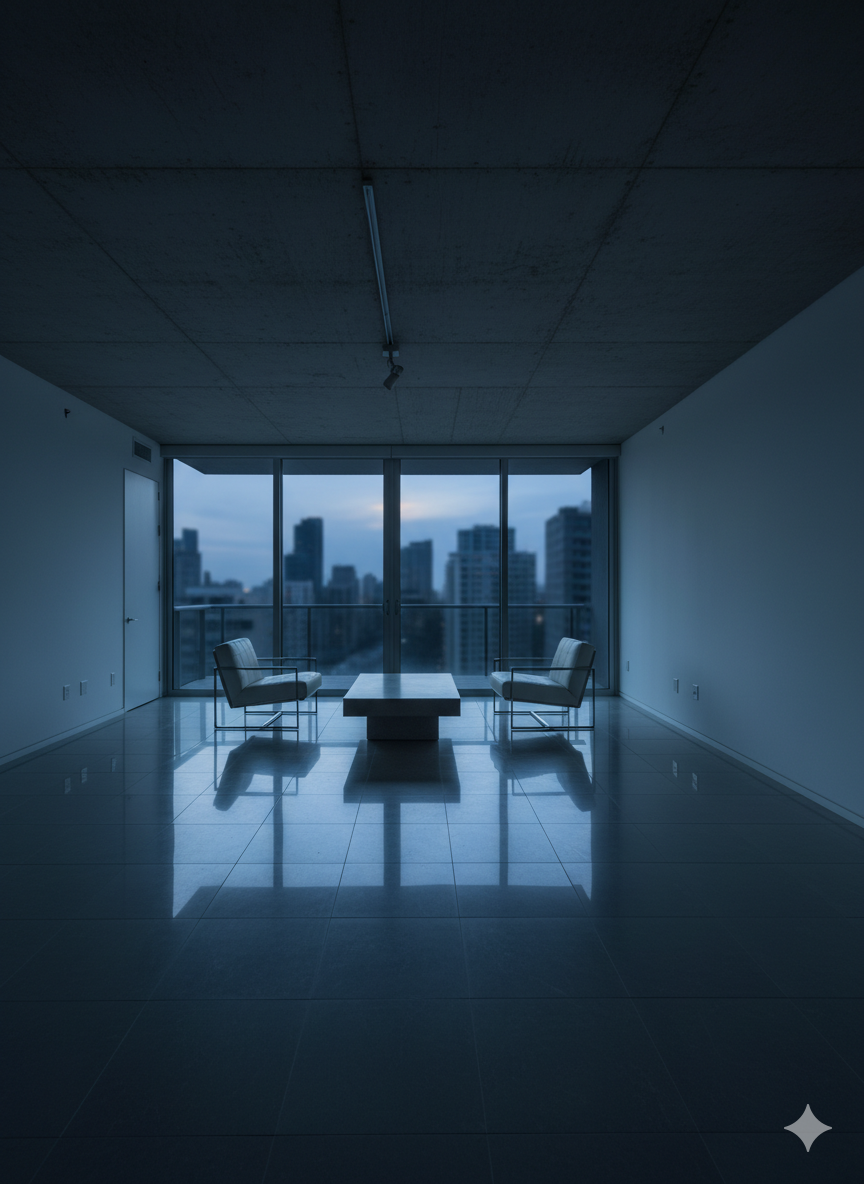
Concrete buildings perform well for airborne noise, but impact noise remains a problem, especially when hard floors are installed without proper underlayment. Meanwhile, modern “luxury” finishes—porcelain tile, glass, minimal upholstery—make rooms more reflective and acoustically harsh.
Most South Florida jurisdictions and condo associations require STC ≥ 50 and IIC ≥ 50 between units (field-tested allowances are often lower). If you’re changing floors, expect to prove compliance.

Acoustic Materials That Don’t Look Acoustic
The biggest myth in sound control is that it has to look technical. In reality, the most effective solutions blend directly into design.
Wall Treatments That Photograph Well
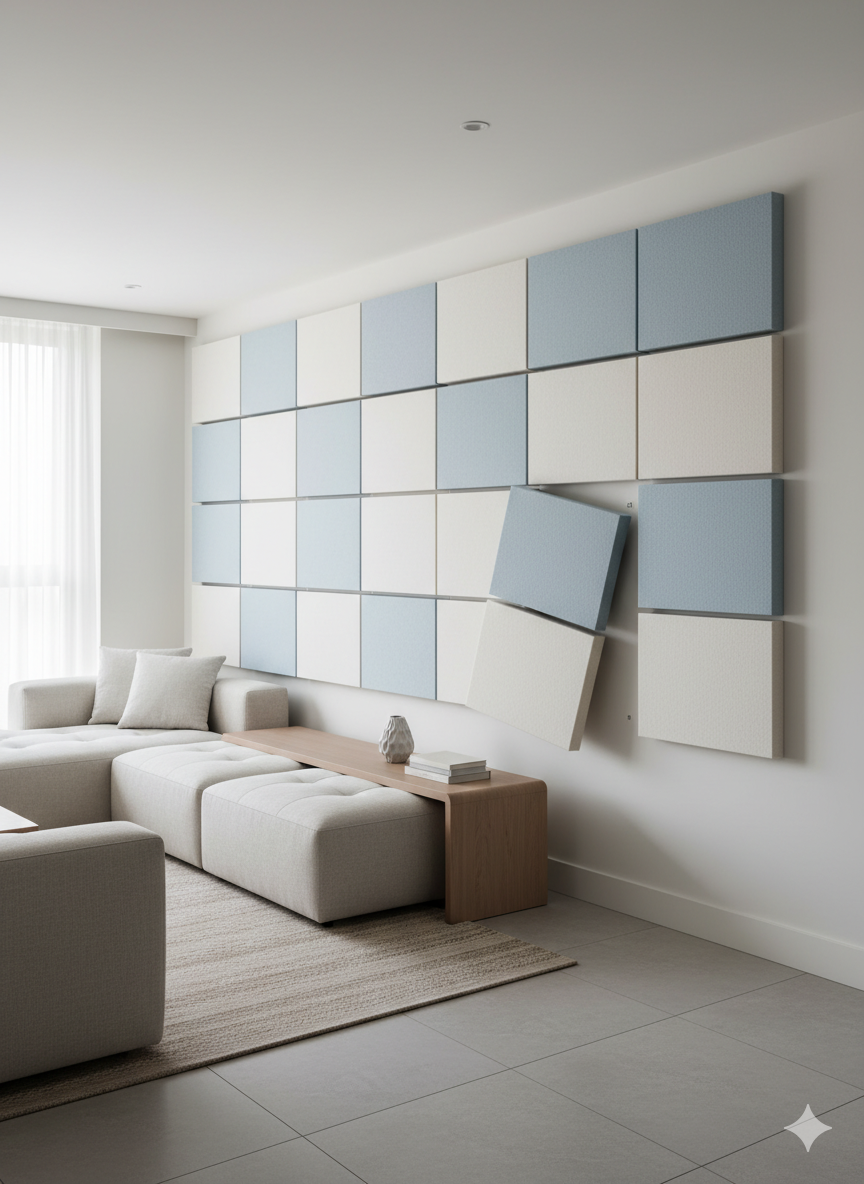
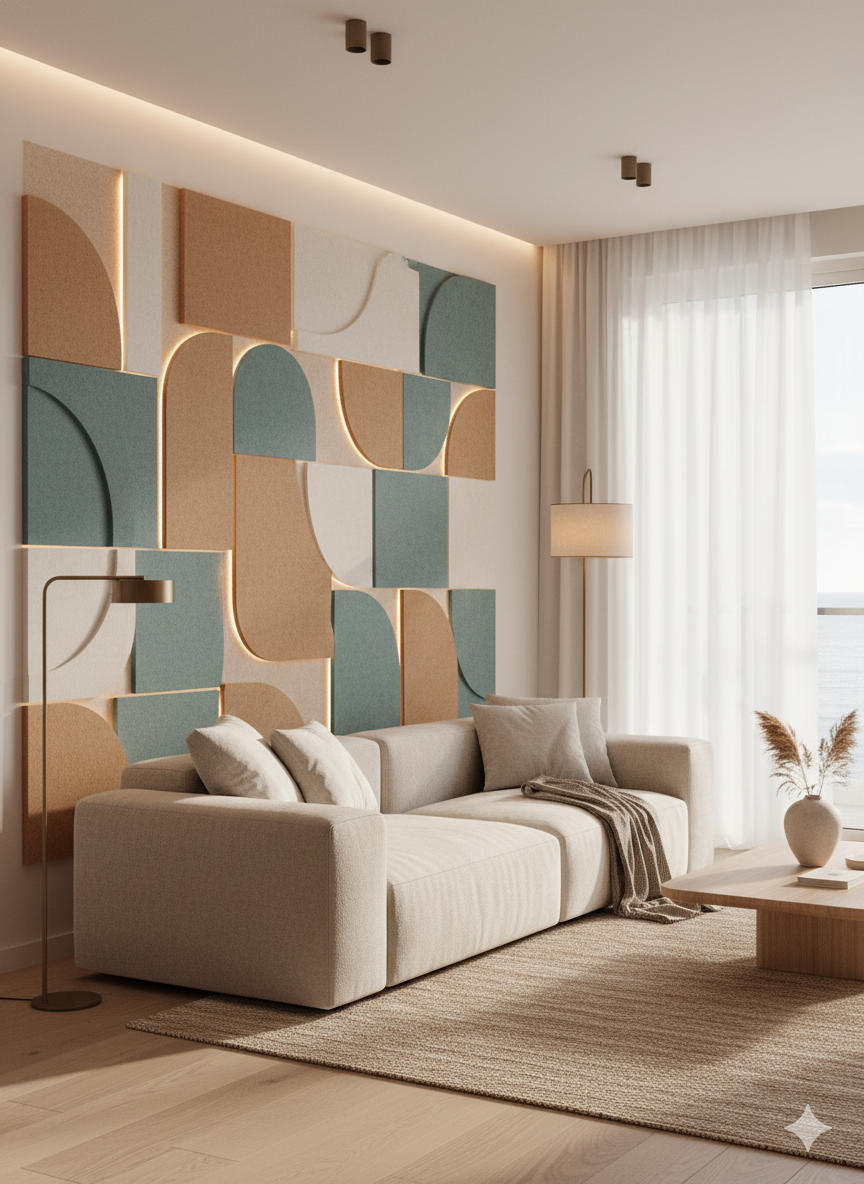
- Fabric-wrapped or PET felt panels absorb mid- and high-frequency noise while reading as art or texture
- Available in Class-A fire-rated assemblies (critical for condos)
- Easily vacuumed or spot-cleaned; many PET felts tolerate diluted bleach
- Can be printed, sculpted, or color-matched to the palette
Ceiling Solutions for Tall, Hard Rooms
- Slim acoustic clouds or baffles reduce echo dramatically
- Common in hospitality, nearly invisible in photos when specified correctly
- Ideal for living rooms with slab ceilings and minimal furnishings
What to Avoid
- Polyurethane “egg-crate” foam (often combustible and non-compliant)
- DIY solutions without fire ratings
- Anything that reads as temporary or technical
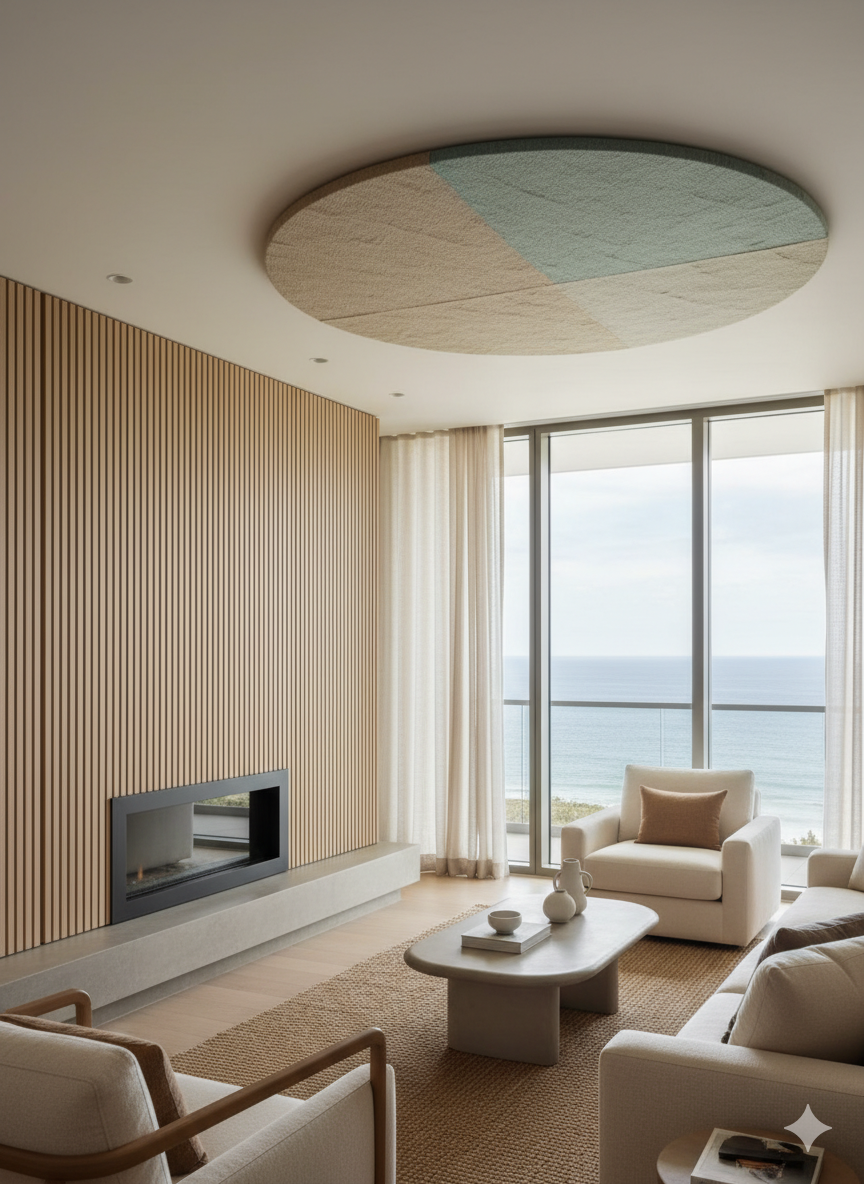
Soft Surfaces That Do Double Duty
You don’t need carpet wall-to-wall to improve acoustics.
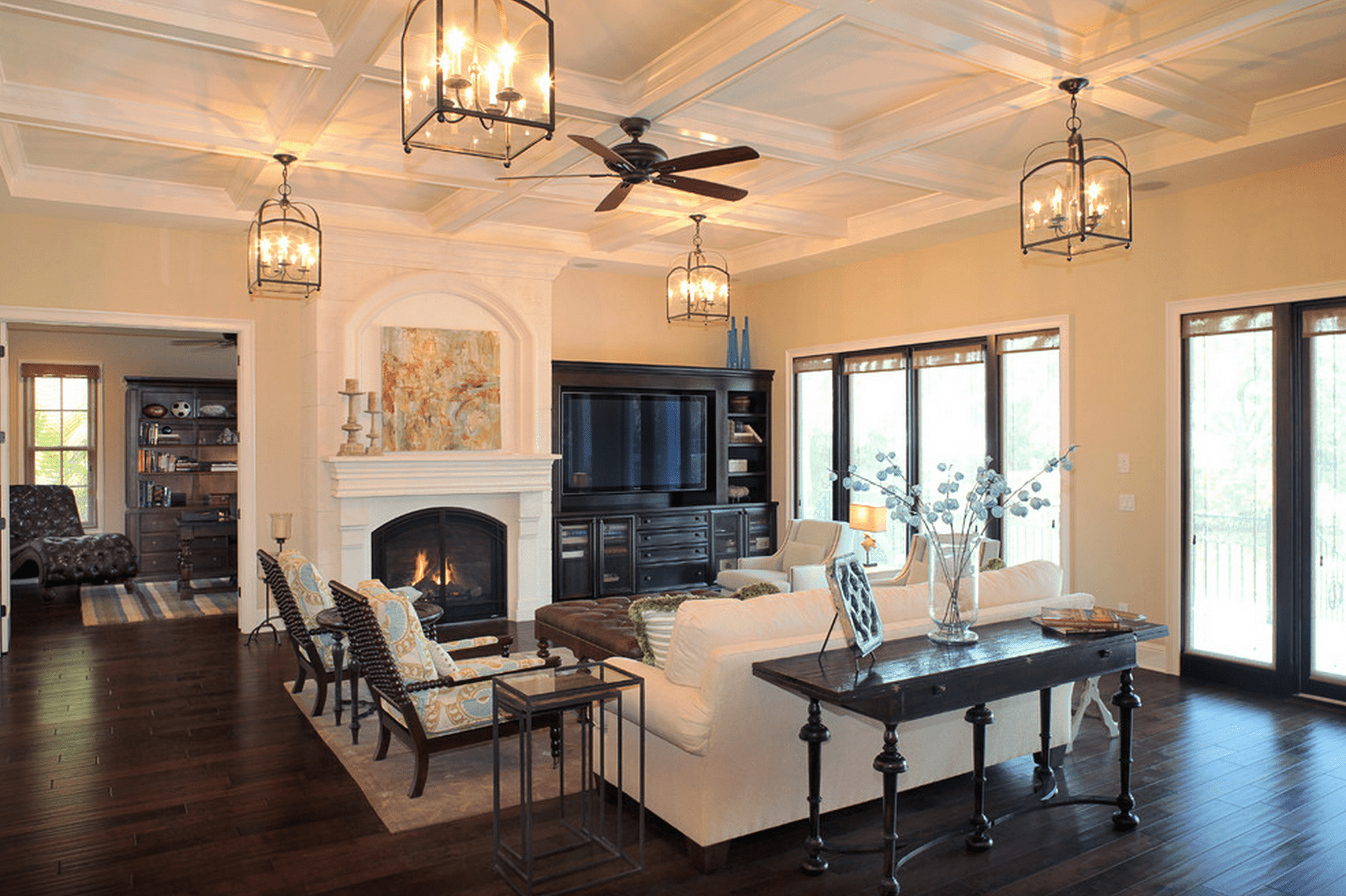
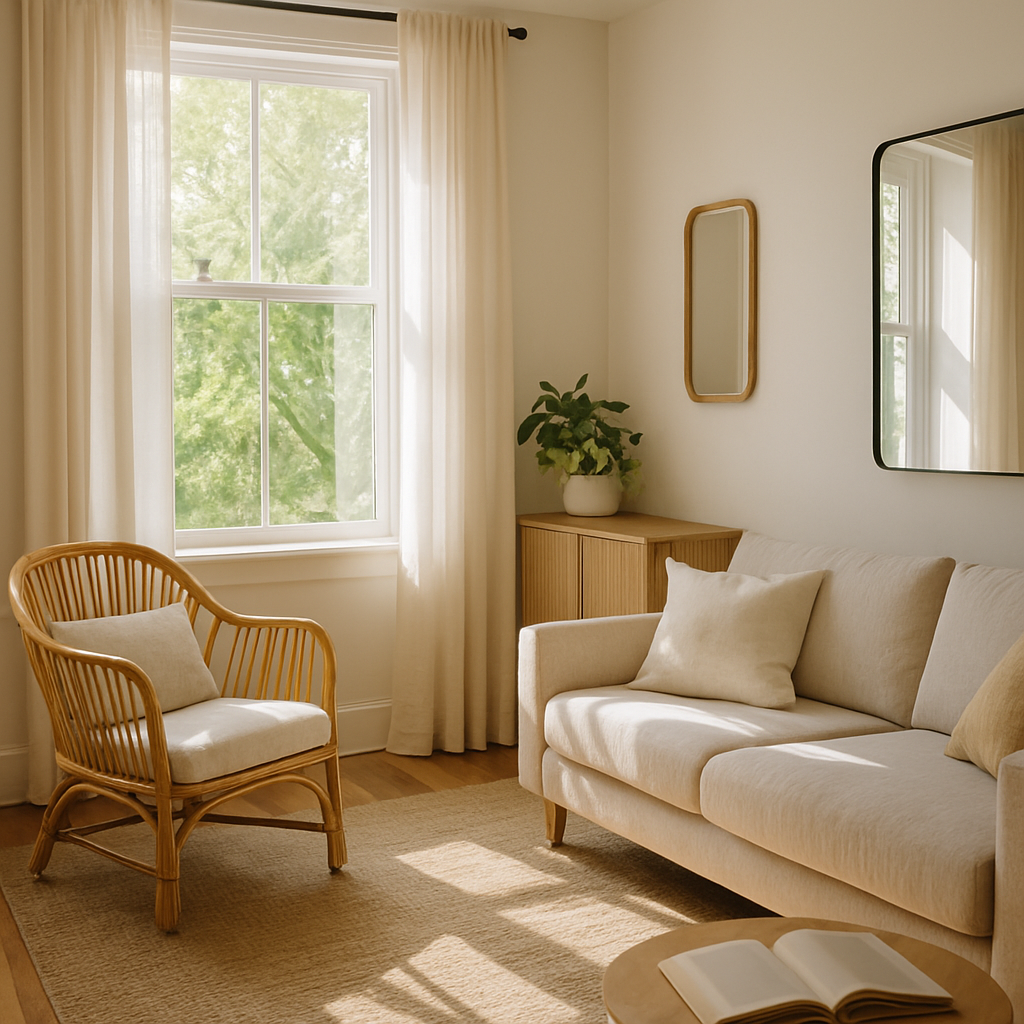
- Area rugs + dense pads soften footfall paths and reduce room harshness
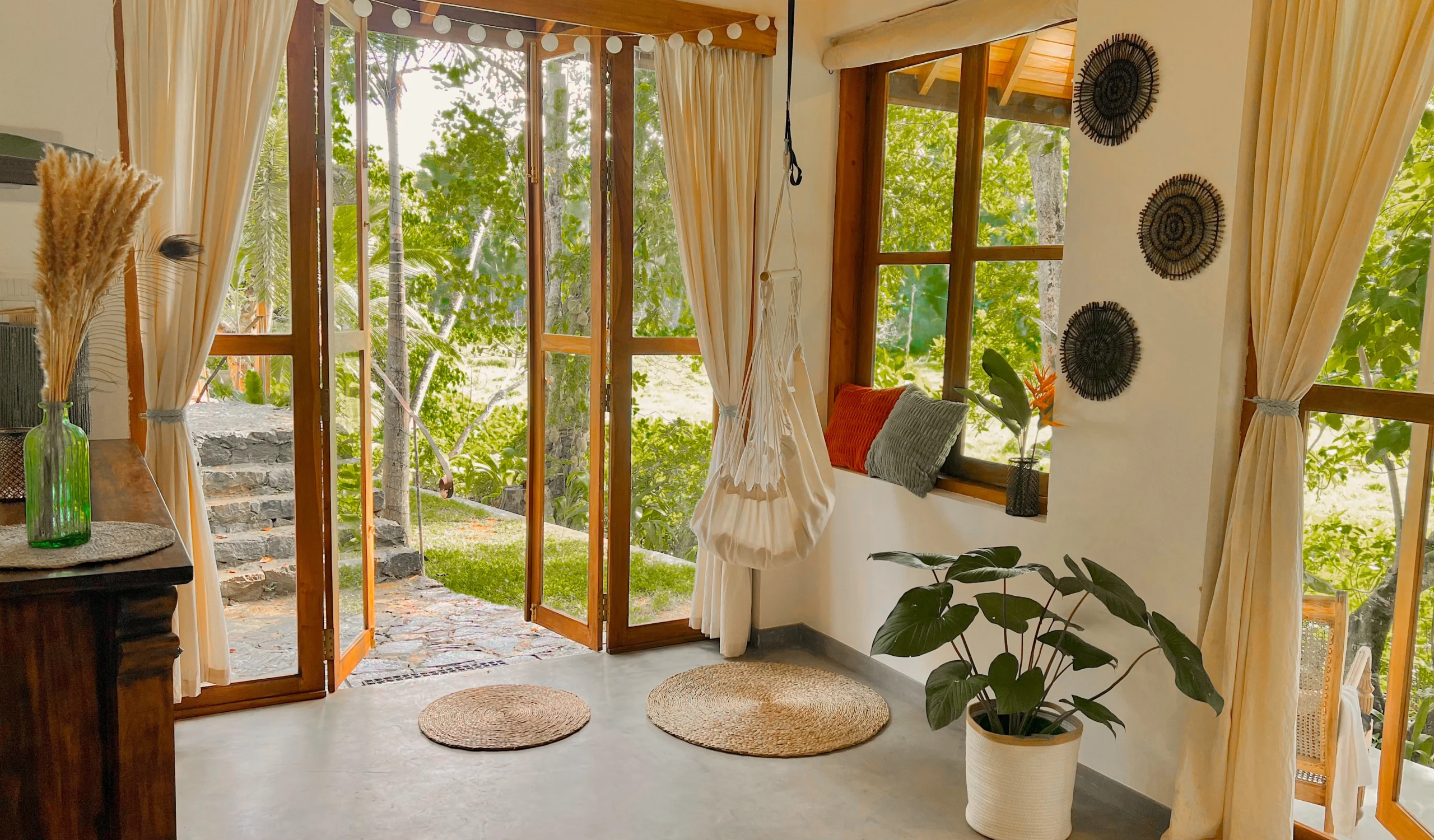
- Lined drapery helps control reflections near glass (not soundproofing, but noticeable comfort gains)
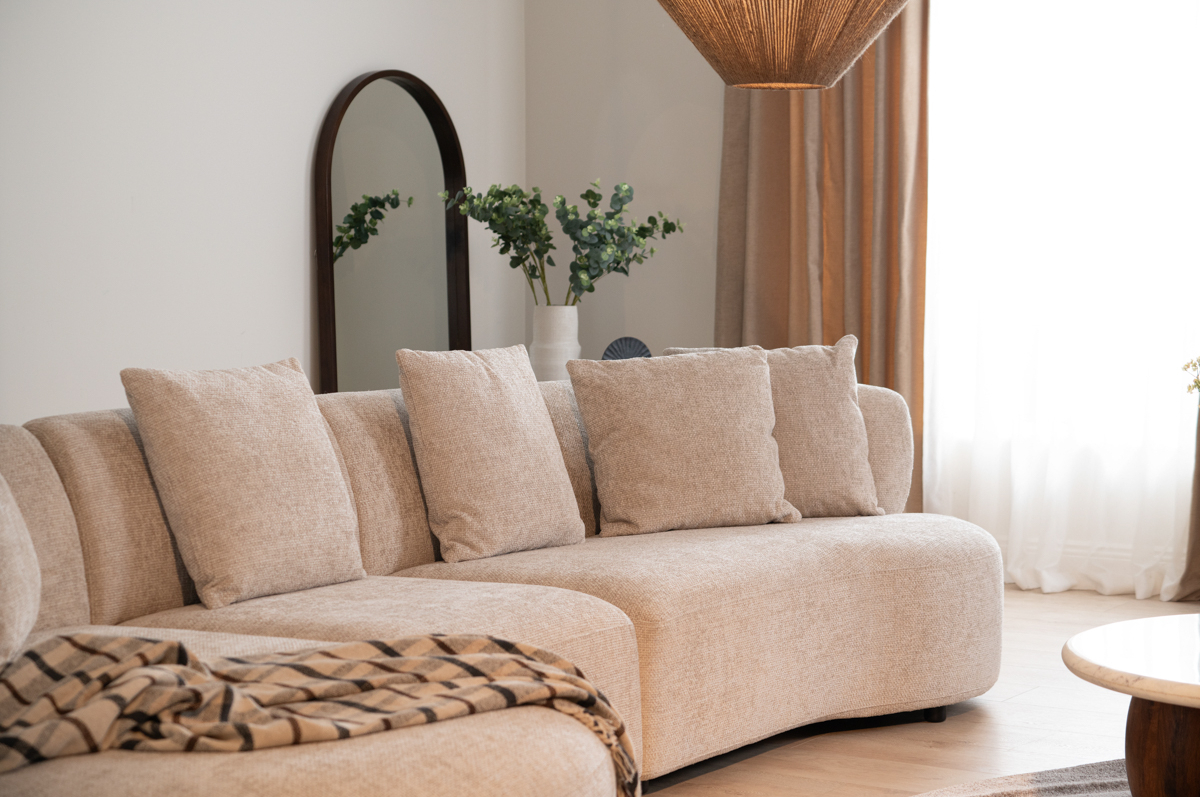
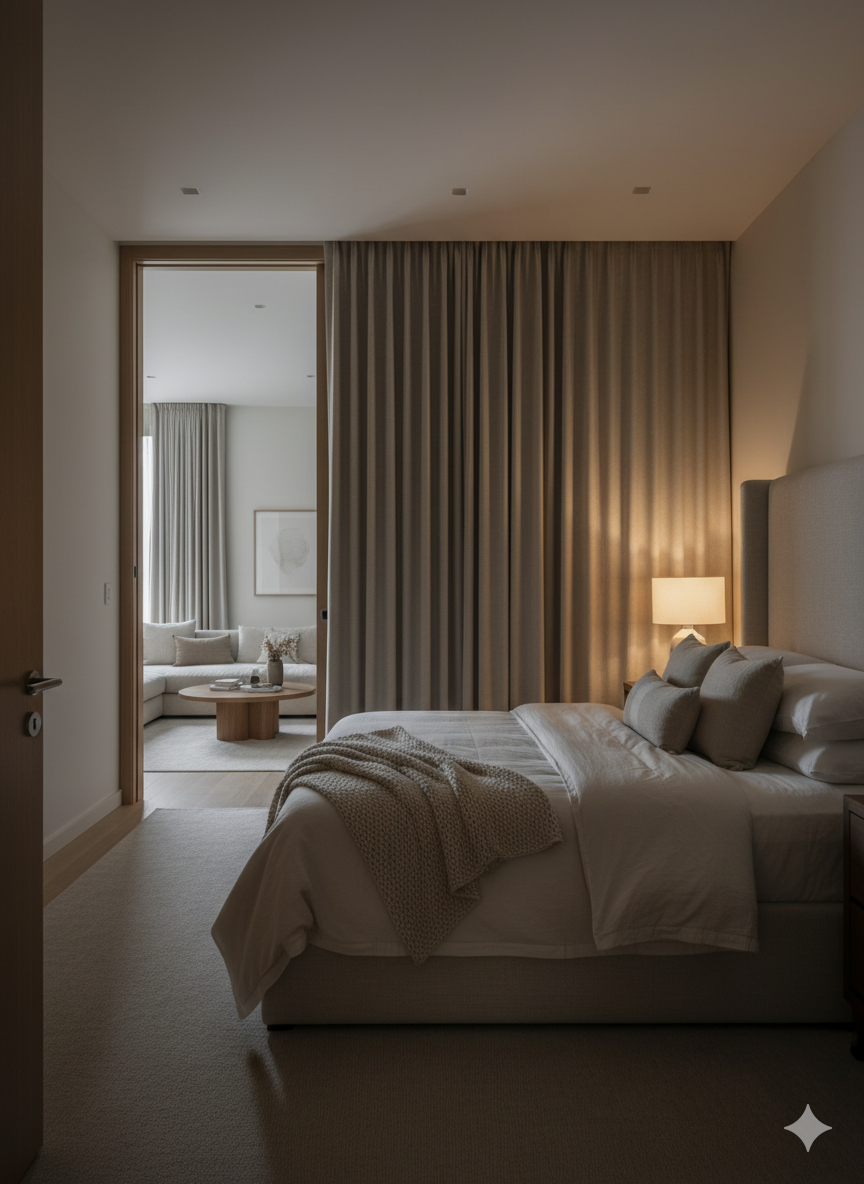
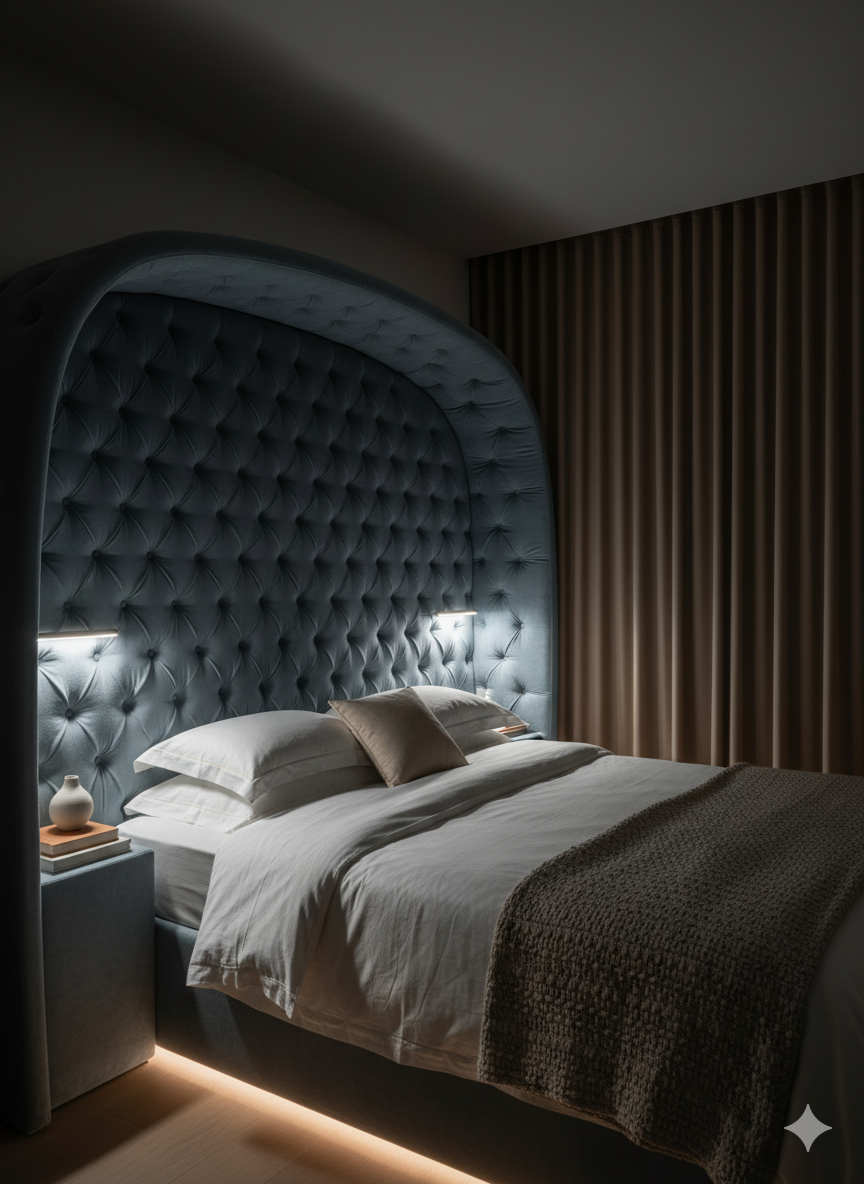
- Upholstered headboards, benches, and dining chairs quietly add absorption where guests spend time
These elements improve sound and elevate listing photos—no tradeoff required.

Floors, Walls, and Ceilings: Know the Limits
Floors (Most Critical)
Hard surfaces over slab transmit impact noise. If you’re retrofitting:
- Verify HOA and AHJ requirements before specifying finishes
- Use tested underlayment assemblies with documentation
- Keep acoustical reports on file—many Florida jurisdictions request them
Ceilings (Without Opening Drywall)
You can’t raise STC without construction, but you can reduce perceived loudness:
- Ceiling clouds or baffles
- Strategic absorption over seating zones
Walls
Minor gains come from mass (millwork, bookcases), but meaningful improvements require:
- Resilient channels or clips
- Additional gypsum with damping compounds These are capital-scope decisions, not quick fixes.

The Biggest Sound Leaks (Fix These First)
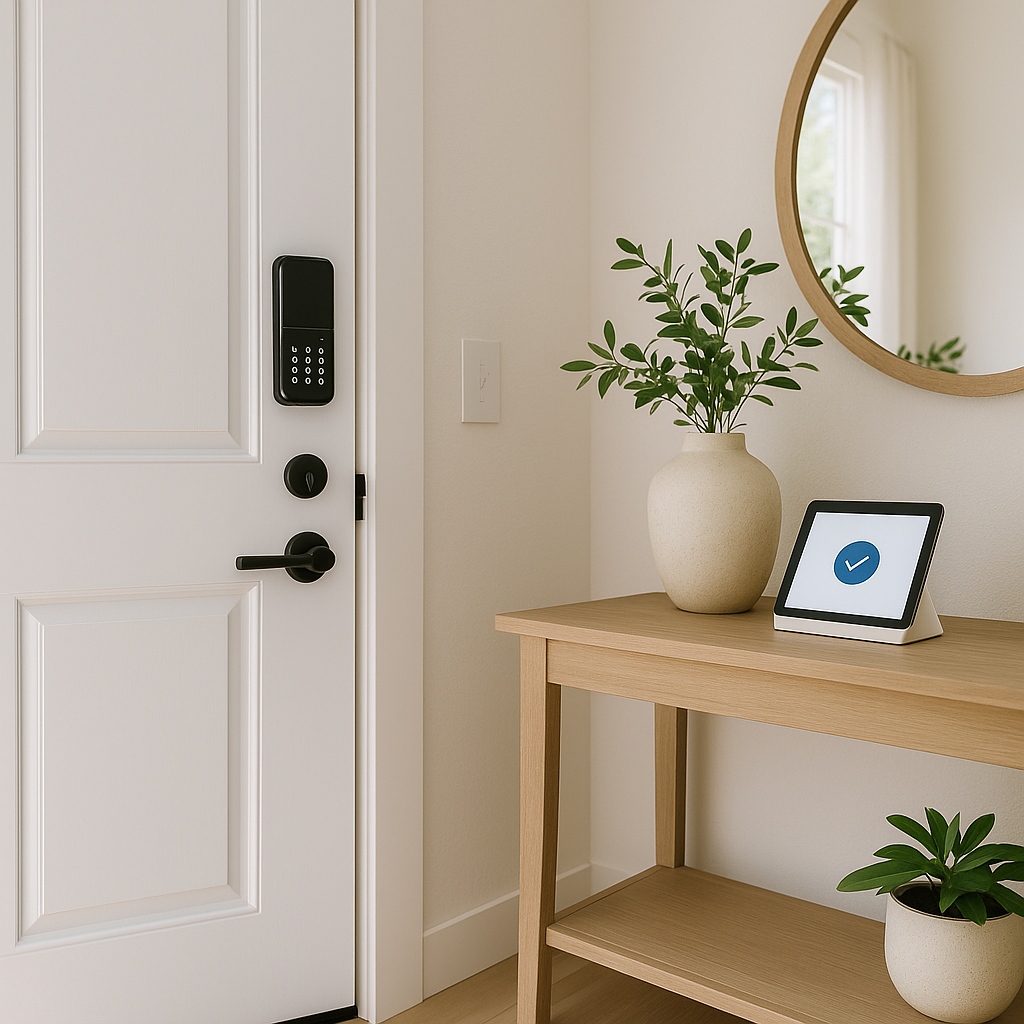
- Entry doors Corridor noise is a major culprit. Add:
- Full perimeter gasketing
- Automatic door bottoms
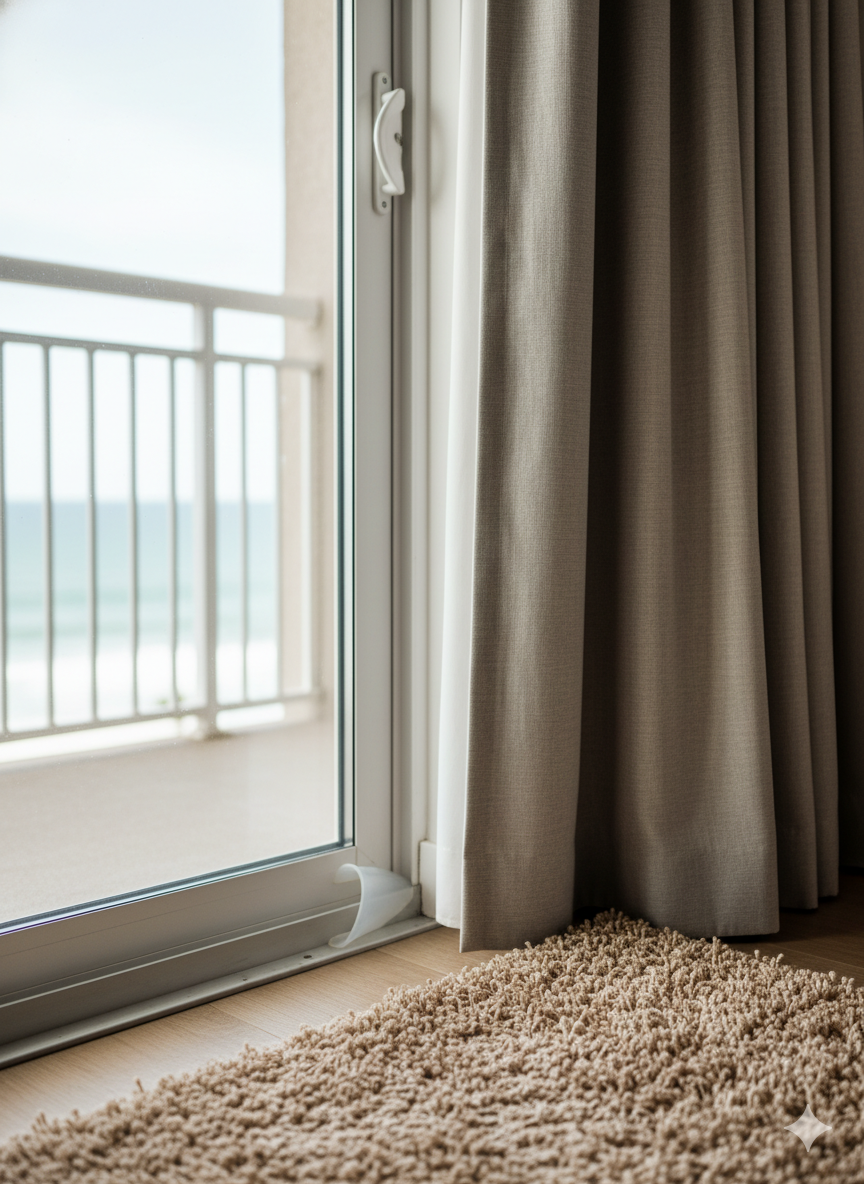
- Balcony sliders & windows
- Laminated glazing outperforms standard dual-pane
- Pair with lined drapery for interior absorption
- HVAC returns & penetrations
- Lined duct runs where permitted
- UL-listed putty pads at back-to-back outlets
These are small interventions with outsized results.
Designing for STR Turnover
Acoustic solutions must survive cleaning crews and suitcase traffic.
- Specify modular panels that can be removed or replaced individually
- Install with cleats or magnets, not adhesives
- Add acoustic elements to your turnover SOPs (vacuum, spot clean, visual reset)
- Photograph “correct” staging so teams restore layouts consistently
Durability is non-negotiable in STR interiors.
STR-Specific Acoustic Priorities
- Sleep zones first: bedroom doors, windows, and headboards
- Living rooms second: evening noise is what travels to neighbors
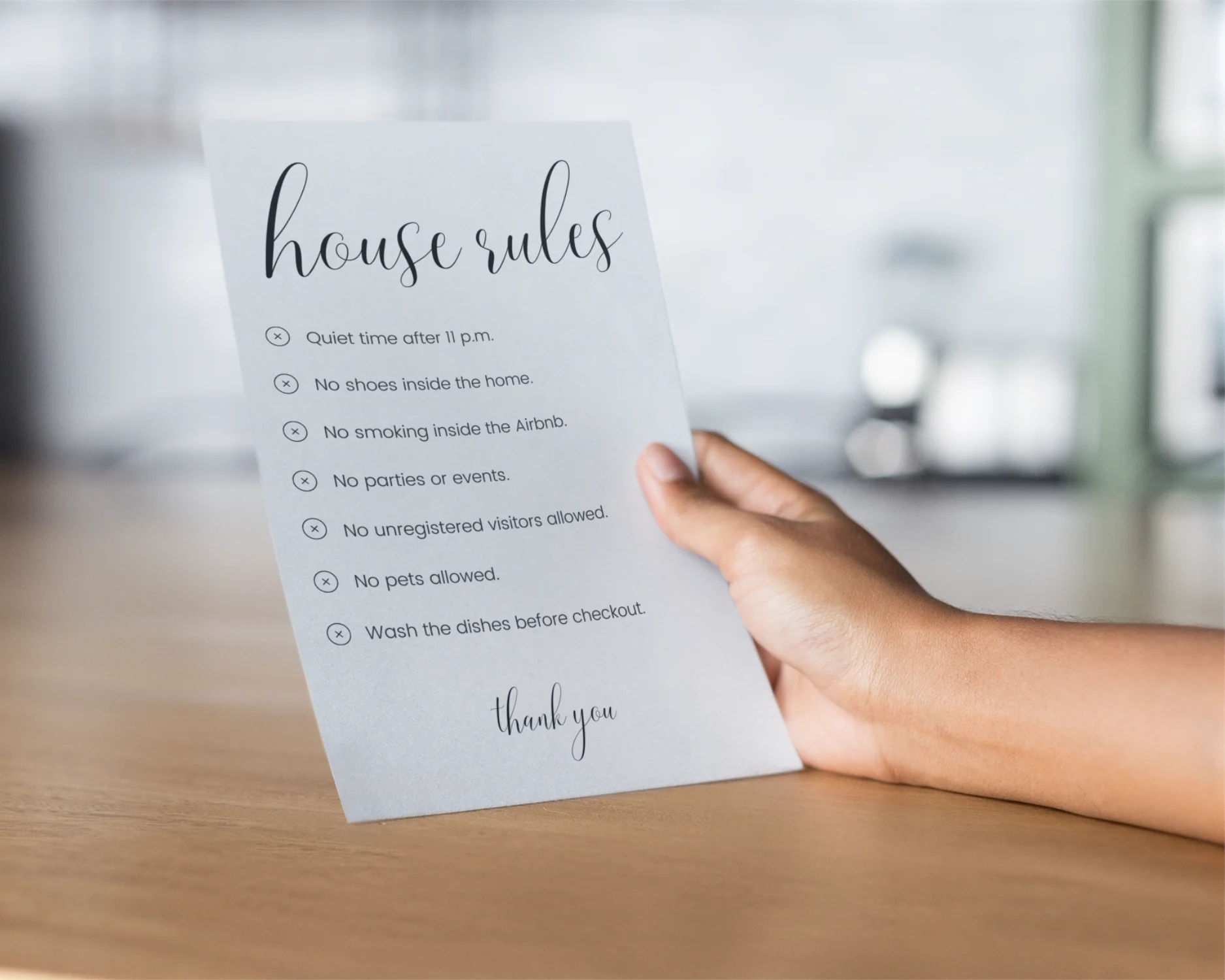
- Post neutral quiet-hour reminders; design should support behavior, not rely on rules
White-noise machines don’t solve structural problems—and they don’t help neighbors.
Acoustic Design That Still Sells
Quiet can be a visual asset.
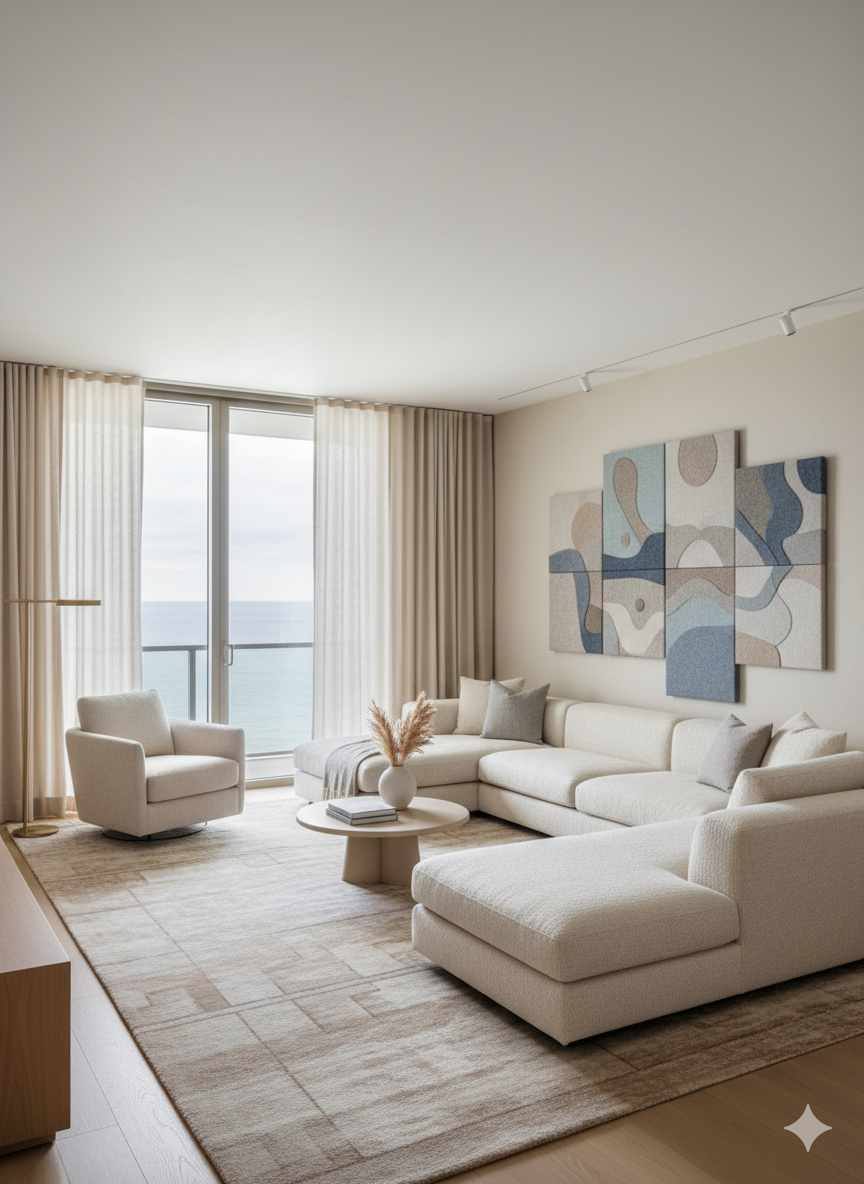
- Acoustic art panels elevate walls while improving sound
- Felt textures and ceiling features add architectural interest
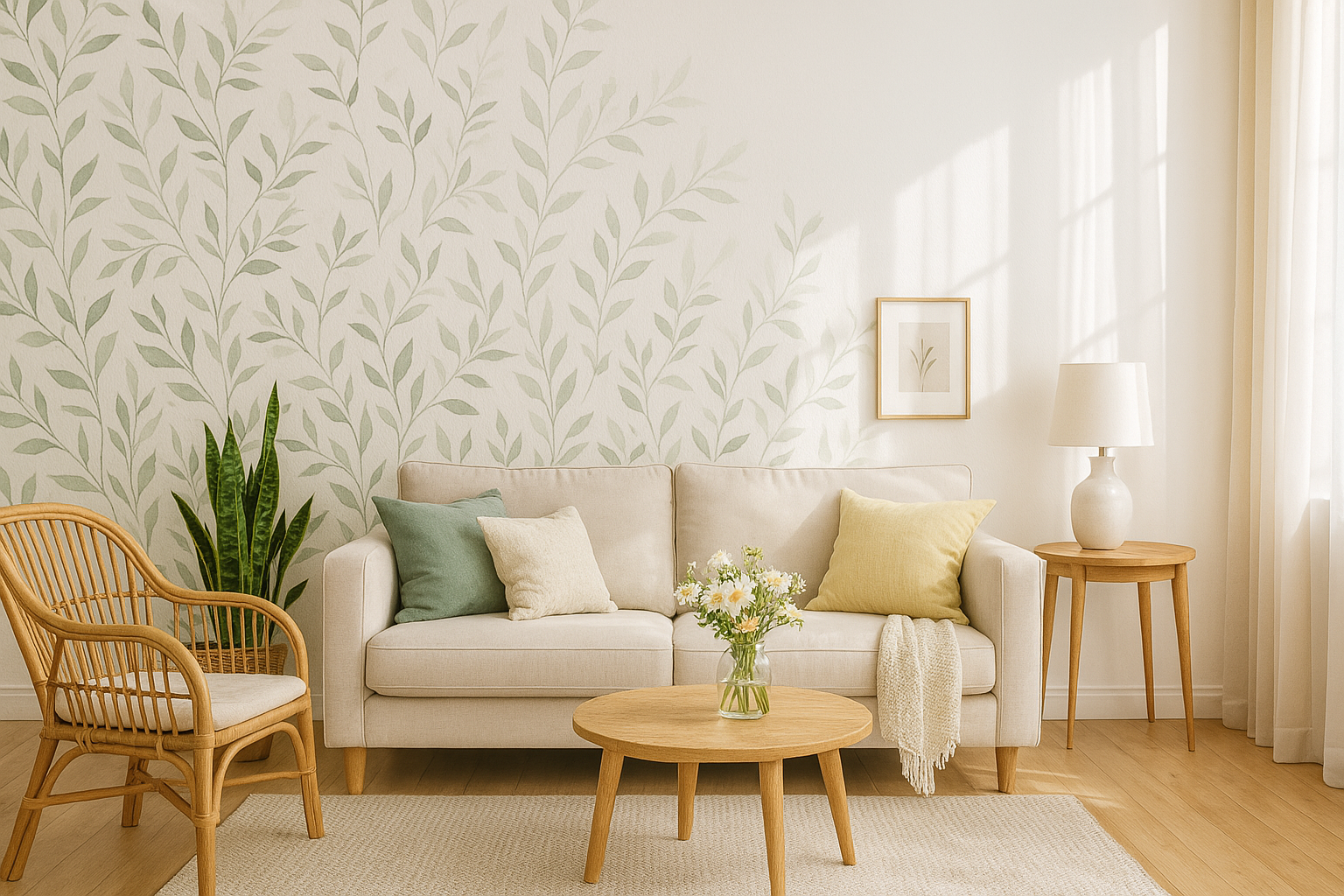
- Softer rooms photograph warmer and feel more premium
In listings, “quiet,” “peaceful,” and “great sleep” consistently outperform trend-driven buzzwords.
ROI: Why This Pays Back
- Fewer refunds tied to sleep complaints
- Reduced HOA warnings and fines
- Better reviews with language guests actually search for
- Smoother approvals for future renovations
Small decibel reductions at night produce outsized comfort gains—and guests notice.
Common Owner Mistakes
- Assuming concrete equals soundproof
- Installing hard floors without tested underlayment
- Using non-rated foam tiles
- Skipping HOA and permit acoustics documentation
- Treating noise reactively instead of designing it out
The New Standard for Condo Interiors
As STR density rises, quiet interiors are becoming baseline hospitality, not a premium add-on. Some consultants now recommend IIC targets above code minimums for hard-surface condos—especially in short-term rental buildings.
Design that ignores acoustics will age poorly. Design that addresses it discreetly becomes future-proof.
In condos, silence is engineered—not hoped for.
The best acoustic interiors don’t announce themselves. They feel calm, photograph beautifully, survive turnover, and keep both guests and neighbors happy. In today’s regulatory and review-driven environment, that’s not just good design—it’s risk management.
Quiet, done right, is one of the smartest upgrades you can make.